
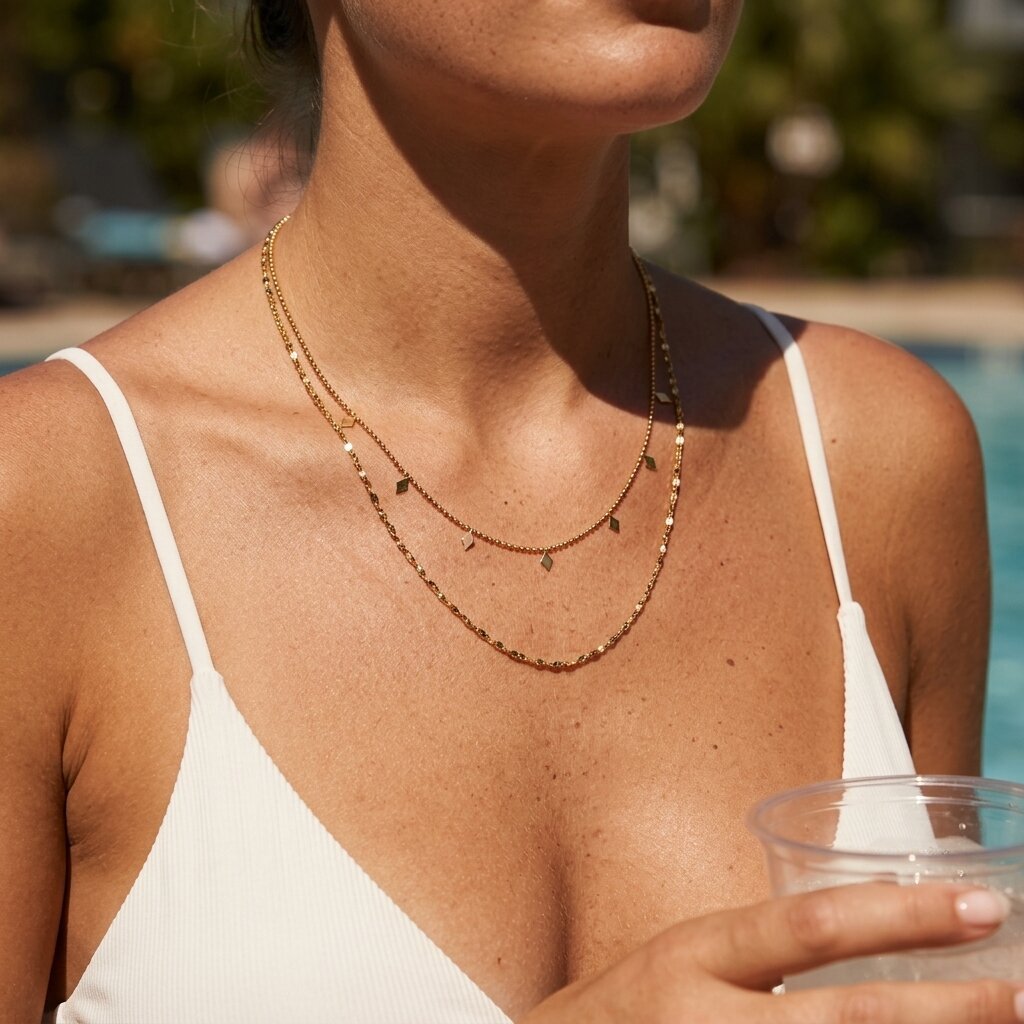
How Is Waterproof Jewelry Made? | The Complete Guide
Waterproof jewelry is made by combining corrosion-resistant materials with durable surface finishes and construction designed to cope with regular exposure to water, sweat and everyday wear. For gold-tone waterproof jewelry, one common approach is to use stainless steel as the base metal and apply a gold-coloured PVD coating to the surface. The stainless steel provides strength and corrosion resistance, while the PVD process creates the decorative gold finish.
However, making waterproof jewelry isn't simply a matter of coating a piece of metal. The base material, surface preparation, coating process, design and other components of the finished piece all contribute to how it performs. At MOREA, relevant waterproof pieces are made using stainless steel and an 18K gold PVD coating, with jewelry designed around water, sweat and everyday wear.
How is waterproof jewelry made step by step?
Although manufacturing methods vary between brands and individual designs, making waterproof jewelry generally involves several important stages. It starts with choosing an appropriate base material, followed by creating the design, preparing the surface and applying the required decorative finish. The construction of the complete piece also needs to be considered, particularly when stones, pearls, clasps or other components are included.
1. Choosing the base metal
The process starts with the material underneath the visible surface. This matters because the base metal affects the strength, corrosion resistance, weight and overall durability of the finished jewelry. A beautiful surface coating cannot completely compensate for an unsuitable material underneath it.
Stainless steel is particularly useful for waterproof jewelry because it combines strength with corrosion resistance. This makes it a practical foundation for jewelry intended to encounter water, sweat and humidity regularly, which is why stainless steel forms the foundation of many MOREA waterproof pieces.
2. Creating the jewelry design
The base material then needs to be formed into the intended design. Depending on the piece, this can involve creating chains, links, rings, clasps, settings, pendants and other components before they are assembled into the finished piece.
Construction matters because jewelry isn't always a single piece of coated metal. A necklace might include a chain, clasp, pendant and stones, while earrings can contain posts, closures and decorative components. The entire piece therefore needs to be considered when determining how suitable it is for everyday water exposure.
3. Preparing the surface
Before a decorative coating is applied, the metal surface needs to be properly prepared. The appearance and durability of a finish depend partly on the condition of the surface underneath it, so creating a suitable surface provides the foundation for the coating that follows.
This is an important but easily overlooked part of jewelry manufacturing. When you see the finished gold colour, you're seeing the final result of several stages rather than simply a layer of colour placed onto raw metal.
4. Applying the PVD finish
For relevant gold-tone waterproof pieces, MOREA uses PVD coating. PVD stands for Physical Vapor Deposition and is a process used to deposit a thin layer of material onto a surface. For jewelry, it allows a decorative gold-coloured finish to be created over a durable base material such as stainless steel.
PVD is particularly useful for jewelry intended for regular wear because the aim isn't simply to make the piece look attractive when it is new. The surface also needs to cope with conditions jewelry encounters in everyday life, including water, sweat, humidity, skin oils, cosmetics and repeated movement.
This combination of stainless steel and PVD coating is one of the reasons it has become a popular construction method for modern waterproof jewelry. For a broader comparison of materials, read MOREA's guide to the best waterproof jewelry.
Why is stainless steel used for waterproof jewelry?
Stainless steel provides a strong foundation because it offers good resistance to corrosion while also being strong enough for regular everyday use. That's particularly important for jewelry intended to remain on during normal activities. A necklace may encounter sweat during a workout, water in the shower and humidity on holiday, sometimes within the same day.
Strength matters too because jewelry is exposed to constant movement, contact and friction. The underlying material therefore needs to do more than simply resist moisture. For these reasons, stainless steel provides a practical balance of durability, corrosion resistance and suitability for everyday jewelry.
Why is PVD used on gold waterproof jewelry?
Stainless steel provides the foundation, but gold-tone jewelry also needs its characteristic colour and surface appearance. That's where the finish becomes important. PVD provides a method of creating a thin decorative coating over the underlying metal and is used in applications where a durable surface coating is desirable.
This makes the combination particularly useful for everyday jewelry. Stainless steel provides the strong, corrosion-resistant foundation, while PVD creates the finished gold appearance. The quality of the complete piece still matters, however, because a coating shouldn't be judged independently from the metal underneath it, the construction of the jewelry and the conditions in which it will be worn.
Is waterproof jewelry actually made from gold?
Not necessarily. The term "waterproof jewelry" describes how a piece is intended to perform around water rather than specifying one particular metal. Gold-tone waterproof jewelry can use stainless steel as its base material with a gold-coloured coating applied to create the desired appearance.
This distinction is worth understanding when shopping because solid gold, conventional gold-plated jewelry and PVD-coated stainless-steel jewelry are different constructions. Rather than judging a piece simply because it looks gold, check the product information to understand the base material and the type of finish being used.
Is all stainless-steel jewelry waterproof?
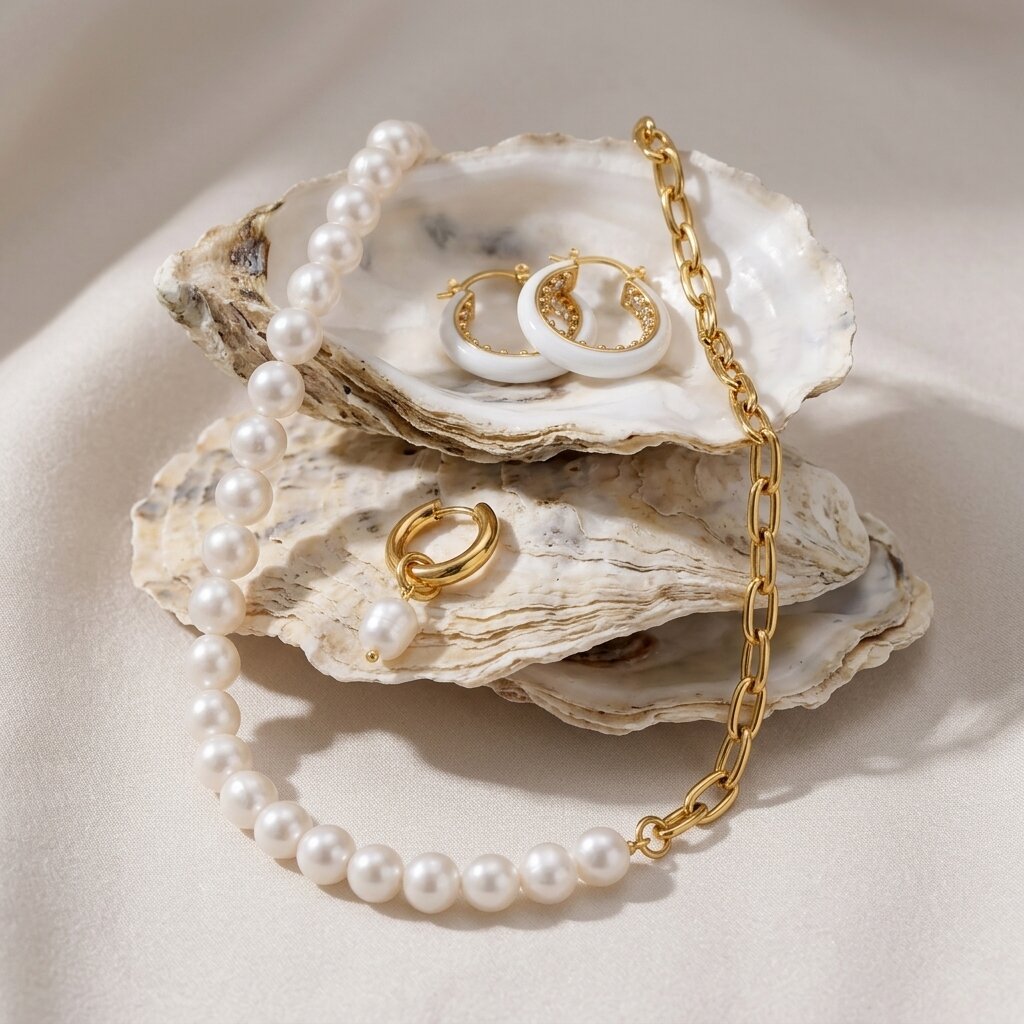
Not automatically. The base metal is only one part of a finished piece, and jewelry can also contain stones, freshwater pearls, cubic zirconia, enamel, clasps, adhesives and other decorative components. Those materials and the way they are incorporated into a design can affect how the finished piece should be worn and cared for.
This is why product-specific information matters. Saying that stainless steel offers good corrosion resistance doesn't mean every object containing stainless steel should automatically be treated identically around water. The construction of the complete piece should always be considered.
What makes waterproof jewelry tarnish resistant?
Tarnishing refers to surface changes that can occur when certain metals react with substances in their environment. The choice of base metal and surface finish therefore matters enormously when creating jewelry intended to resist tarnishing. Using corrosion-resistant stainless steel provides a strong starting point, while a durable surface coating can create the desired appearance while helping the finished piece cope with everyday conditions.
This is different from assuming that any gold-coloured piece will behave the same way around moisture. If tarnish resistance matters to you, look for clear information about what the jewelry is actually made from rather than relying only on descriptions such as "gold tone" or "gold coloured."
How is waterproof jewelry designed for everyday wear?
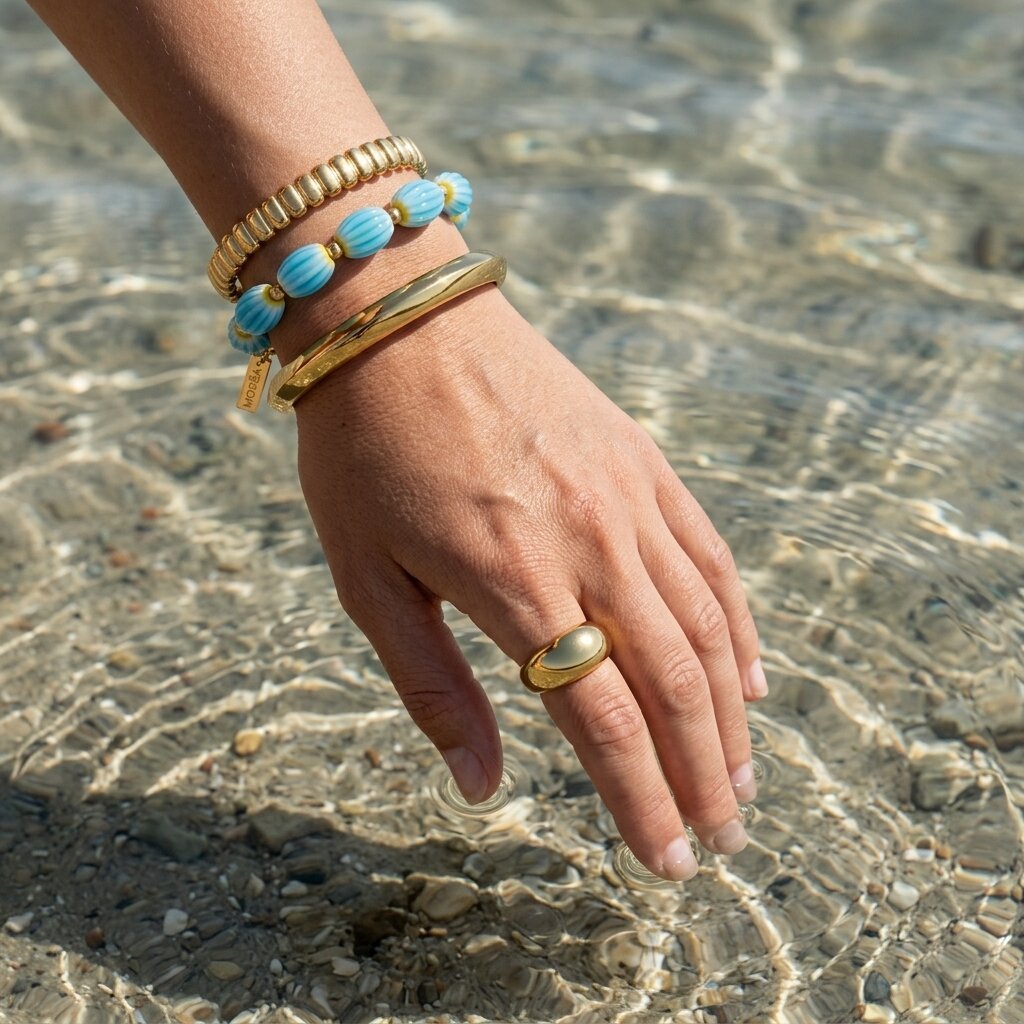
The manufacturing choices make more sense when you consider what jewelry actually encounters during a normal day. A necklace can come into contact with shower water, shampoo, perfume, skincare products, sweat and humidity. Rings are exposed to water repeatedly through hand washing, while bracelets often experience additional contact and friction from desks, clothing and other surfaces.
Waterproof jewelry is designed around the idea that these encounters are normal rather than exceptional. That doesn't make a piece indestructible, because water resistance, chemical resistance and scratch resistance are different things. A waterproof surface can still experience physical abrasion, and harsh household chemicals create very different conditions from ordinary fresh water. The goal is practical everyday durability, not immunity from every possible type of damage.
Can waterproof jewelry be worn in the shower?
Jewelry specifically designed around regular water exposure is intended to make activities such as showering easier. This is one of the practical advantages of choosing waterproof jewelry: you don't have to organise your daily routine around constantly remembering to remove your favorite pieces.
However, shampoo, conditioner, soap and skincare products can leave residue on jewelry over time. Occasional gentle cleaning can help remove that build-up and maintain the appearance of the surface, even when the jewelry itself is designed to cope with regular water exposure.
What about sweat and exercise?
Waterproof jewelry isn't only useful around showers and swimming pools. Sweat and humidity are part of everyday life, particularly during exercise, travel and warmer weather. Jewelry worn during a workout can encounter repeated moisture, skin oils and movement, so the choice of base material and surface finish becomes particularly important.
A piece intended for active everyday wear should be designed with those conditions in mind rather than requiring protection from every encounter with moisture. Physical abrasion still matters, especially with rings and bracelets, which may experience more contact with gym equipment and other hard surfaces than necklaces or earrings.
Can waterproof jewelry be worn while swimming?
Swimming introduces different conditions from ordinary fresh water. Pools contain chlorine, while seawater introduces salt and minerals. Sunscreen, sand and other products can also come into contact with jewelry during a beach or pool day, making swimming a more demanding environment than simply washing your hands or taking a shower.
Jewelry designed around water exposure is better suited to these environments than delicate conventional fashion jewelry, but sensible care still helps. Rinsing jewelry with fresh water after significant exposure to chlorine or seawater can help remove residue from the surface.
How does MOREA make its waterproof jewelry?
MOREA's waterproof jewelry combines stainless steel with 18K gold PVD coating across relevant gold-tone pieces. The stainless-steel foundation provides strength and corrosion resistance, while the PVD finish creates the gold-coloured surface designed around regular everyday wear. The aim is to create jewelry that doesn't have to be constantly removed as you move between ordinary parts of your day.
MOREA offers waterproof designs across its main jewelry categories, including waterproof necklaces, waterproof earrings, waterproof bracelets and waterproof rings. Different designs can include additional materials and decorative components, so the individual product information should always be checked when choosing a piece.
Why does MOREA offer a Lifetime Color Warranty?
Durability claims are more meaningful when a brand is prepared to stand behind them. Eligible MOREA pieces are covered by a Lifetime Color Warranty, providing customers with additional reassurance about the colour finish according to the terms of the warranty.
For customers comparing waterproof jewelry, that provides something more concrete than a durability claim alone. It's still important to read the applicable warranty terms so you understand exactly what is covered and any conditions that apply.
How will MOREA test its waterproof jewelry?
Materials and manufacturing methods can explain why jewelry is designed to cope with everyday wear, but real-world testing can provide another useful layer of information. As MOREA develops its testing programme, documented comparisons could include repeated shower exposure, exercise and sweat exposure, chlorinated pool water, salt water and longer-term everyday wear.
Before-and-after photography taken under consistent conditions could also help customers see how individual pieces perform over time rather than relying entirely on written durability claims. Any published testing should clearly state the conditions, duration and particular piece tested so customers can understand exactly what the results demonstrate.
Frequently asked questions about how waterproof jewelry is made
What material is waterproof jewelry made from?
There isn't one universal material. Waterproof jewelry can be made using corrosion-resistant metals such as stainless steel, with additional surface finishes used to create different colours and appearances. The complete construction of the piece also matters when determining how it performs around water.
How is gold waterproof jewelry made?
One approach is to use stainless steel as the base material and apply a gold-coloured PVD coating. The stainless steel provides a durable, corrosion-resistant foundation, while the PVD process creates the decorative surface finish required for the gold appearance.
What does PVD mean in jewelry?
PVD stands for Physical Vapor Deposition. It is a process used to deposit a thin coating onto the surface of another material and can be used to create decorative finishes on jewelry. Its suitability for waterproof jewelry depends on the base material, coating and construction of the finished piece.
Why is stainless steel good for waterproof jewelry?
Stainless steel combines strength with good corrosion resistance, making it well suited to jewelry intended to encounter water, sweat and humidity regularly. Its durability also makes it a practical foundation for pieces intended for frequent everyday wear.
Is PVD jewelry waterproof?
PVD is a surface-coating process rather than a guarantee that every finished piece of jewelry is waterproof. The base material, coating, construction and any additional components of the piece all need to be considered.
Is waterproof jewelry the same as gold-plated jewelry?
Not necessarily. "Waterproof" describes the intended performance of the finished jewelry, while "gold plated" describes a type of surface finish. When comparing jewelry, check both the base metal and the method used to create the gold-coloured surface rather than assuming that all gold-tone pieces are constructed in the same way.
Final answer: how is waterproof jewelry made?
Waterproof jewelry is created by choosing materials, finishes and construction suited to repeated exposure to water, sweat and everyday wear. For relevant MOREA gold-tone pieces, that starts with a stainless-steel foundation and an 18K gold PVD coating. The base metal provides strength and corrosion resistance, while the surface finish creates the gold appearance.
The complete construction still matters, particularly when a design contains stones, pearls, enamel or other components. Ultimately, good waterproof jewelry isn't created by simply adding the word "waterproof" to ordinary fashion jewelry. It starts with choosing materials and manufacturing methods appropriate for the way the finished piece is actually going to be worn.

Leave a comment
This site is protected by hCaptcha and the hCaptcha Privacy Policy and Terms of Service apply.