
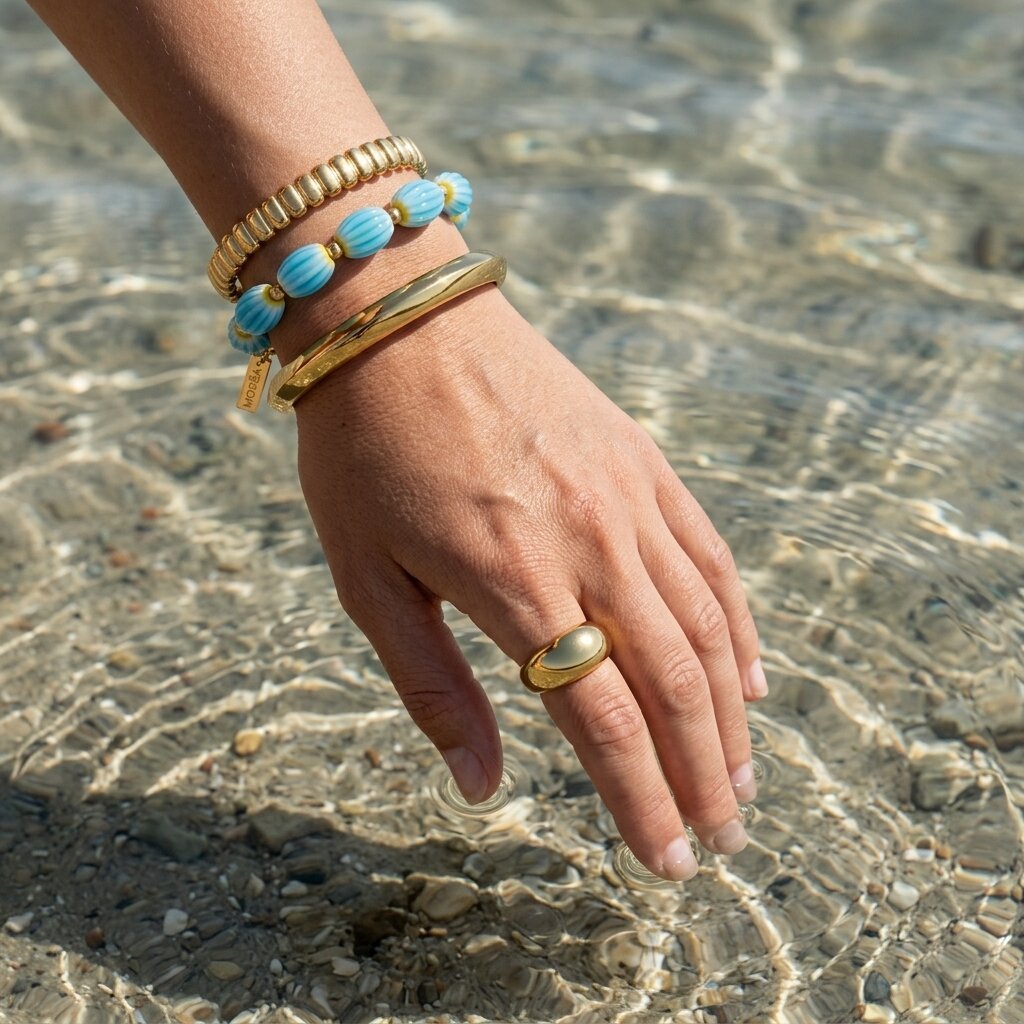
Can You Swim With Waterproof Jewelry?
Yes, you can swim with waterproof jewelry when it has been specifically designed for regular water exposure. Conventional fashion jewelry can be affected by repeated contact with chlorine, salt water, sweat and moisture, which is why many traditional pieces need to be removed before swimming. Waterproof jewelry is designed differently, using materials and finishes selected to cope with the conditions that come with everyday water exposure.
MOREA waterproof jewelry is made for real life, including swimming, showering, workouts, beach days, holidays and everyday wear. Relevant gold-tone pieces combine high-grade stainless steel with an 18K gold PVD coating to create jewelry designed around water, sweat and regular wear. Instead of constantly remembering to remove your favorite pieces, the idea is to choose jewelry made for the way you actually live.
Swimming pools and the sea still create different environments. Pools contain chlorine, while seawater contains salt and minerals, and a beach day can also expose jewelry to sunscreen, sweat, heat and sand. Understanding these differences helps you care for your jewelry properly while still enjoying the freedom waterproof jewelry is designed to provide.
Can you wear waterproof jewelry in a swimming pool?
Yes, if the jewelry has been specifically designed for swimming and water exposure. The important distinction is between waterproof jewelry and conventional fashion jewelry that may use metals, coatings or decorative components requiring more careful treatment. Swimming pools contain chlorine and other treatment chemicals, making them a more demanding environment than ordinary fresh water.
Conventional fashion jewelry with delicate plating may need to be removed before swimming, particularly when the manufacturer recommends avoiding water. MOREA waterproof jewelry takes a different approach by using materials and finishes chosen around regular exposure to water and everyday wear. That means heading to the pool doesn't automatically have to mean taking off your necklace, earrings, bracelet or rings.
Can you swim with MOREA jewelry?
Yes. MOREA waterproof jewelry is designed to be worn while swimming, as well as in the shower, at the gym, on holiday and throughout everyday life. The idea behind the collection is simple: jewelry should be something you live in rather than something you constantly have to protect from water.
Relevant MOREA gold-tone pieces use high-grade stainless steel with an 18K gold PVD coating. Stainless steel provides a strong, corrosion-resistant foundation, while the PVD finish creates the gold-coloured surface and is selected for the durability required for regular wear and water exposure. Together, these materials allow MOREA to create jewelry designed to move with you from everyday activities to the pool or beach.
Explore MOREA Waterproof Jewelry →
Does chlorine damage jewelry?
Chlorine can affect some jewelry, particularly pieces that haven't been designed for repeated chemical and water exposure. How jewelry responds depends on its base metal, surface coating and overall construction, which is why it's difficult to make one rule that applies to every necklace, ring, bracelet or pair of earrings.
Conventional fashion jewelry with delicate plating may require removal before swimming. Jewelry specifically designed around water exposure uses materials and finishes chosen with those conditions in mind. This distinction is much more useful than assuming that everything gold-coloured will behave in exactly the same way in a swimming pool.
If you're buying jewelry that you intend to swim in regularly, look beyond its appearance. Check the base metal, coating, construction and what the brand actually says about water exposure.
Can you swim with stainless steel jewelry?
Stainless steel is particularly well suited to everyday jewelry because of its strength and corrosion resistance. These properties make it a practical foundation for pieces intended to encounter water, sweat and humidity regularly, which is one of the reasons MOREA uses high-grade stainless steel across its waterproof jewelry.
The complete piece still matters because jewelry may also include a decorative coating, stones, pearls, enamel, clasps or other components. However, starting with a corrosion-resistant base material provides an excellent foundation for jewelry designed around an active lifestyle where exposure to moisture is part of normal wear.
Can you swim with gold-plated jewelry?
Not all gold-plated jewelry is made in the same way. Conventional gold-plated fashion jewelry may use a relatively delicate surface finish that isn't designed for frequent exposure to water, sweat, swimming pools or seawater. Other pieces combine corrosion-resistant base materials with more durable coating processes specifically selected for everyday wear.
MOREA uses stainless steel with an advanced 18K gold PVD coating across relevant gold-tone waterproof pieces. PVD, or Physical Vapor Deposition, is a coating process used to create a durable decorative surface over the underlying metal. The important thing isn't simply whether jewelry is described as gold plated; it's what sits underneath the surface, how the finish has been created and whether the finished piece was actually designed for water exposure.
For a deeper explanation of the construction, read our guide to how waterproof jewelry is made.
Can you wear waterproof jewelry in the sea?
Yes. Waterproof jewelry designed for swimming can be worn in the sea. MOREA jewelry is designed around a lifestyle that includes ocean swims, beach days, holidays and regular exposure to water, so you don't have to leave your favorite pieces behind every time you head into the sea.
Seawater is different from fresh water because it contains salt and minerals, while the wider beach environment can add sunscreen, sweat, heat and sand. Sand is particularly worth remembering because waterproof and scratch-proof mean different things. Jewelry can be designed to resist water while still experiencing physical scratching or abrasion if it is repeatedly rubbed against sand or another rough surface.
None of this means you need to be afraid of wearing waterproof jewelry at the beach. It simply means that a little sensible care after heavier exposure can help remove the residue collected during a day by the sea.
Is salt water bad for jewelry?
Salt water can be a problem for jewelry that hasn't been designed for seawater exposure, particularly when delicate metals or finishes are involved. With waterproof jewelry designed around swimming, the materials and finish are selected with regular water exposure in mind.
Salt and minerals can remain on the surface after seawater evaporates, while sunscreen and skincare products can add another layer of residue during a beach day. A quick rinse with fresh water after significant time in the sea is therefore a useful habit. It removes unnecessary residue without turning jewelry care into a complicated routine.
Should you rinse waterproof jewelry after swimming?
Yes. We recommend rinsing jewelry with clean fresh water after significant exposure to a chlorinated pool or the sea. This isn't because waterproof jewelry needs to be protected from ordinary water; it's simply an easy way to remove chlorine, salt, sunscreen and other residue that may remain on the surface after swimming.
You don't need an elaborate cleaning routine every time you leave the pool. Rinse the jewelry with fresh water, gently remove obvious sunscreen or skincare build-up and dry it with a soft cloth when convenient. Avoid unnecessarily abrasive cleaning products that could physically scratch the surface. Simple care allows you to enjoy the main benefit of waterproof jewelry: actually being able to wear it around water.
Can you swim with a waterproof necklace?
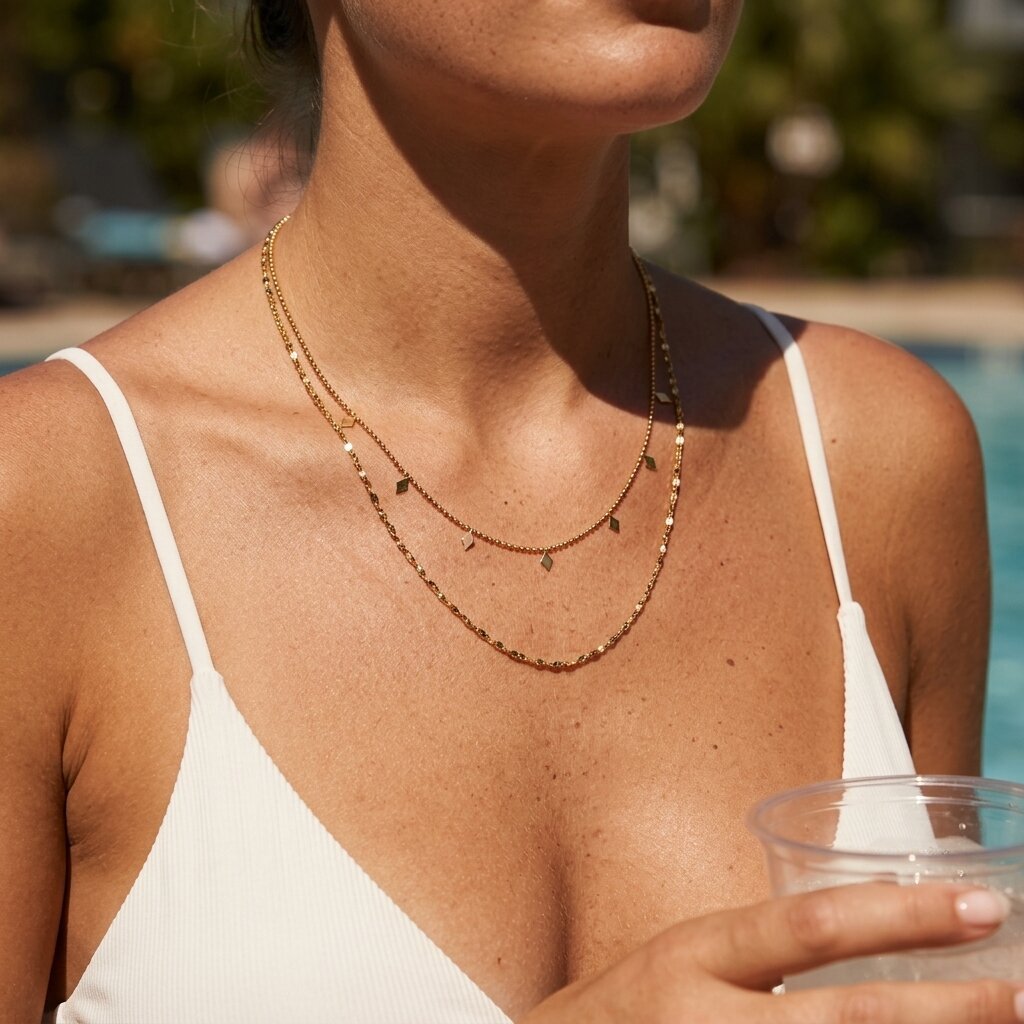
Yes. A waterproof necklace designed for regular water exposure can stay with you through swimming, showers, workouts and holidays rather than constantly being taken on and off. This is particularly useful if you have a favorite necklace you prefer to wear every day.
There is one practical consideration that has nothing to do with waterproofing: losing your necklace. Swimming, diving, waves and water sports can place additional movement and force on chains and clasps, so make sure the fastening is secure before entering the water. Calm swimming in a pool is also very different from surfing, diving or being hit by waves at the beach, so consider the activity as well as the materials.
Shop MOREA Waterproof Necklaces →
Can you swim with waterproof earrings?
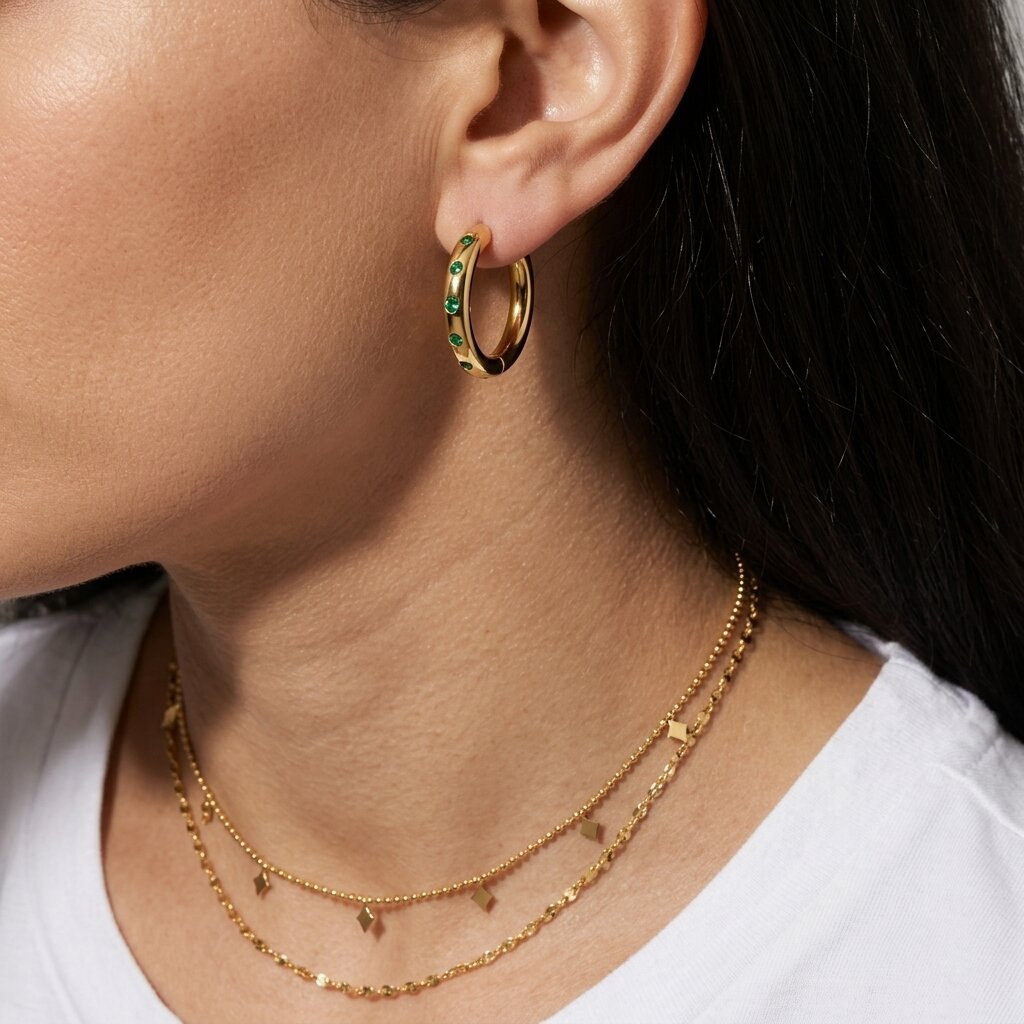
Yes. Waterproof earrings are particularly convenient on holiday because small studs and hoops are exactly the type of jewelry many people prefer to leave in throughout the day. Rather than taking them out before the pool and putting them back in afterwards, earrings designed for water exposure can remain part of your everyday look.
As with necklaces, it's worth thinking about the fastening as well as the materials. Check that backs, posts and closures are secure before swimming, particularly if you're diving, swimming in waves or participating in water sports. The jewelry may be perfectly capable of handling the water, but a loose fastening can still result in a lost earring.
Shop MOREA Waterproof Earrings →
Can you swim with waterproof rings?
Yes. Waterproof rings are particularly useful because rings already encounter water throughout everyday life. Hand washing, showering, exercise and hot weather can expose them to moisture repeatedly, so choosing a ring made around those conditions removes much of the need to constantly take it on and off.
When swimming, remember that the security of the ring matters as well as its materials. Fingers can change slightly in size in cold water, potentially making a loose ring easier to lose. Before heading into a pool or the sea, make sure the ring fits securely, particularly if you're planning to dive, swim in waves or take part in water sports.
Can you swim with waterproof bracelets?
Yes. Waterproof bracelets designed for regular water exposure can be worn while swimming. Like rings, bracelets naturally encounter plenty of moisture during everyday activities, so materials selected around water and sweat make them much easier to incorporate into daily life.
Bracelets can experience additional movement during swimming, particularly during energetic activities, so check that clasps and fastenings are secure. Physical contact is also worth considering because waterproof doesn't mean scratch-proof, and bracelets can rub against pool edges, equipment and other hard surfaces.
Shop MOREA Waterproof Bracelets →
Is swimming with jewelry different from showering?
Yes. MOREA waterproof jewelry is designed around both, but the environments aren't identical. A shower primarily involves fresh water alongside shampoo, conditioner, soap and skincare products. A swimming pool introduces chlorine and other treatment chemicals, while seawater introduces salt and minerals.
A beach day can be more demanding again because your jewelry might encounter seawater, sunscreen, sweat, heat and sand within the space of a few hours. Choosing jewelry designed around these real-life conditions means you don't have to treat every encounter with water as a reason to take it off. Basic care can still help maintain its appearance, particularly by removing product, salt or chlorine residue after heavier exposure.
What jewelry is best for swimming?
The best jewelry for swimming is jewelry that has actually been designed for regular water exposure. Rather than choosing based only on appearance, look at the base material, surface coating, complete construction and what the brand says about swimming and water.
Corrosion-resistant stainless steel provides a strong foundation for everyday waterproof jewelry. For gold-tone pieces, a durable surface process such as PVD can be used to create the decorative gold finish while supporting the performance expected from jewelry intended for regular wear. You should also consider stones, pearls, enamel, clasps and other components because the complete construction of the piece matters.
MOREA waterproof jewelry is created specifically around this lifestyle. Our pieces are designed to move from showers and workouts to swimming pools, ocean swims, holidays and everyday wear without requiring you to constantly take your jewelry off.
Explore MOREA Waterproof Jewelry →
Why MOREA jewelry is made for swimming
MOREA was created around a simple idea: jewelry should fit into your life rather than your life having to fit around your jewelry. Our waterproof pieces are designed for water, sweat and daily wear, including the moments when conventional fashion jewelry would normally need to come off.
Relevant gold-tone pieces combine high-grade stainless steel with advanced 18K gold PVD coating. This construction is designed to provide the strength, corrosion resistance and durable finish needed for jewelry that moves with you from morning routines to workouts, swimming pools, beaches and evenings out.
Eligible MOREA pieces are also covered by our Lifetime Color Warranty, subject to the applicable warranty terms. The aim isn't simply to describe our jewelry as waterproof; it's to create pieces designed around the way they're actually going to be worn.
How should you care for waterproof jewelry after swimming?
Waterproof jewelry shouldn't require a complicated care routine. After significant swimming in a chlorinated pool or seawater, rinse the piece with clean fresh water to remove residue. If sunscreen, skincare or other products have accumulated on the surface, gently clean them away and use a soft cloth when drying the piece.
Avoid unnecessarily harsh household chemicals and abrasive cleaning materials. Waterproofing doesn't make a surface immune to physical scratching, so sensible treatment still helps maintain the appearance of your jewelry over time. It's also worth occasionally checking clasps, backs and other fastenings if you regularly swim while wearing jewelry, because water resistance doesn't eliminate ordinary mechanical wear.
Frequently asked questions about swimming with waterproof jewelry
Can you wear waterproof jewelry in a chlorinated pool?
Yes, if the jewelry has been specifically designed for swimming and regular water exposure. Conventional jewelry may need to be removed because chlorine can affect certain metals and finishes, while waterproof jewelry uses materials and construction chosen around exposure to water.
Can you swim with MOREA jewelry?
Yes. MOREA waterproof jewelry is designed to be worn while swimming, including in pools and the sea. The pieces are created around a lifestyle that includes water, sweat, showers, workouts and everyday wear.
Can you wear MOREA jewelry in the sea?
Yes. MOREA waterproof jewelry is designed around real-life activities including ocean swims and beach days. A fresh-water rinse after significant seawater exposure is still a useful way to remove salt, sunscreen and other residue from the surface.
Can you shower with MOREA jewelry?
Yes. MOREA waterproof jewelry is designed to be shower-safe, so you don't need to remove it every time you shower. Soap, shampoo and skincare products can still leave residue, so occasional gentle cleaning can help keep the surface looking its best.
Can you swim with PVD jewelry?
That depends on the complete piece. PVD describes the coating process rather than automatically making every PVD-coated product suitable for swimming. MOREA combines PVD coating with high-grade stainless steel across relevant pieces specifically designed around water exposure and everyday wear.
Should you rinse waterproof jewelry after swimming?
Yes. A fresh-water rinse after significant pool or seawater exposure is a sensible care habit because it removes chlorine, salt, sunscreen and other residue. It doesn't mean the jewelry can't handle water; it's simply straightforward maintenance after a more demanding environment.
Final answer: can you swim with waterproof jewelry?
Yes. Waterproof jewelry specifically designed for swimming can be worn in pools, the sea and other everyday situations involving water. The important difference is how the jewelry has been constructed: conventional fashion jewelry may require more careful treatment, while waterproof jewelry uses materials and finishes selected around regular water exposure.
MOREA waterproof jewelry is designed for exactly that kind of lifestyle. From swimming pools and ocean swims to showers, workouts, holidays and everyday wear, our pieces are made to stay with you through real life. Give them simple care after heavier chlorine or salt-water exposure, check that clasps and fastenings are secure, and spend less time worrying about when you need to take your jewelry off.

Leave a comment
This site is protected by hCaptcha and the hCaptcha Privacy Policy and Terms of Service apply.